UNIDO ITPO Shanghai was invited to attend the Shanghai International Think Tank Forum
The Shanghai International Think Tank Forum, organized by the Development Research Center of the Shanghai Municipal People’s Government, serves as a high-level dialogue platform that brings together global expertise to support Shanghai’s development. The forum has long been dedicated to providing forward-looking international perspectives and professional recommendations for the major decision-making of the Shanghai Municipal Party Committee and Government. The intellectual outcomes and pragmatic suggestions generated through the forum hold significant practical relevance for Shanghai’s efforts to foster new quality productive forces, build a modern industrial system, and promote high-quality development.

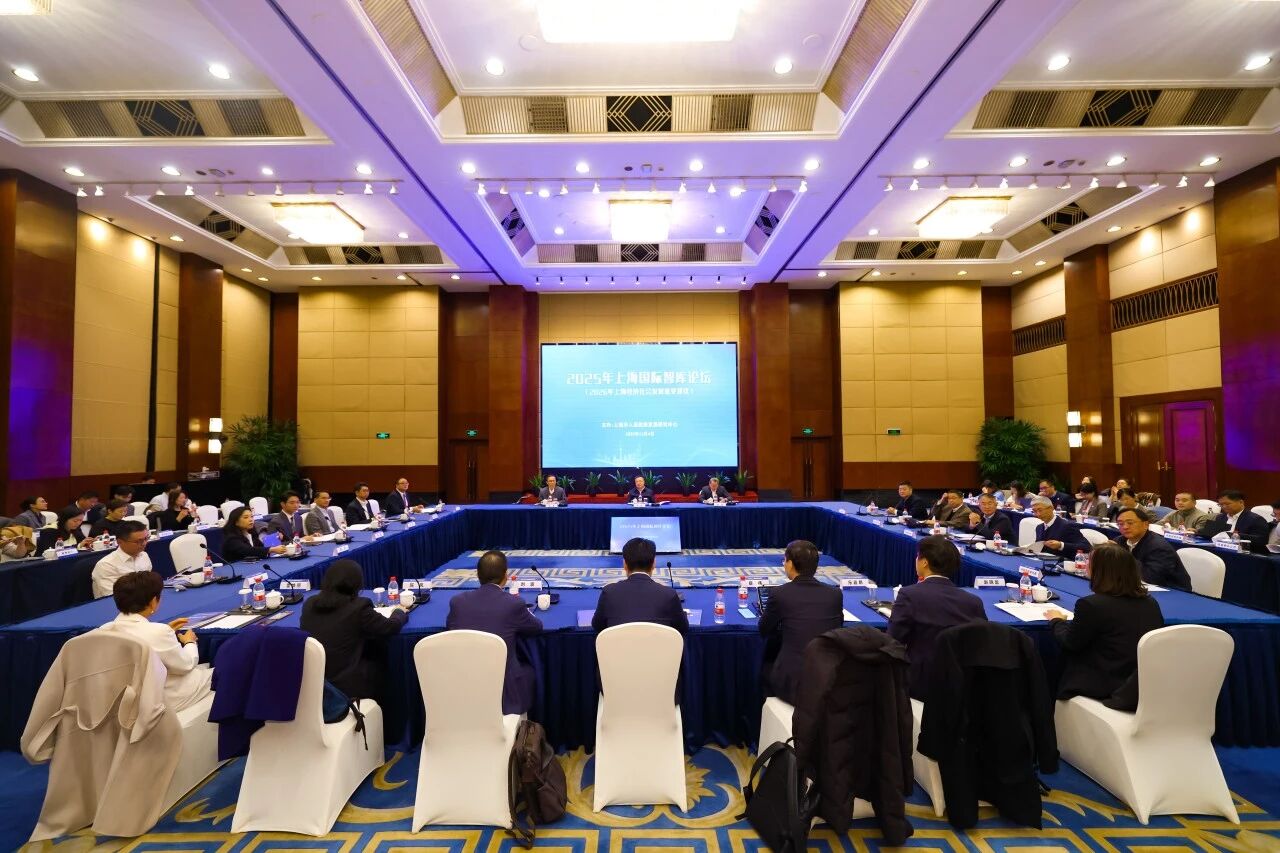
The 2025 Shanghai International Think Tank Forum was held as scheduled on December 4 at the Jinjiang Auditorium. SHU Qing, Member of the Leading Party Members’ Group of the Shanghai Municipal People’s Government, attended and delivered a speech. The forum was chaired by QI Yan, Secretary of the Party Leadership Group and Director of the Development Research Center of the Shanghai Municipal People’s Government. Experts at the forum conducted discussions on international trends in the development of producer services and their implications for Shanghai, put forward opinions and suggestions for Shanghai’s economic and social development in 2026, and engaged in dialogue with leaders from relevant municipal departments and bureaus.
ZHAO Xiaolei, Head of UNIDO ITPO Shanghai, was invited to attend the forum and delivered a speech. Under the title “The Upgrading of Producer Services to Support Shanghai’s ‘Five Centers’ Initiative”, she elaborated that during the window of global economic paradigm shift, producer services have evolved from a supportive role into systemic solutions. The current technological wave driven by AI, nanomaterials, and bioengineering is far more closely related to producer services than to consumer services. The “continuous data loop” in the transition from traditional manufacturing to smart manufacturing serves as a strong pillar for producer services and constitutes the core of a tightly-knit industrial ecosystem. As an economic hub city in China and the Asia-Pacific region, Shanghai must seize the opportunity of industrial transformation centered on smart manufacturing and green technologies, draw on international experience, strengthen its advantages in high-end producer services such as R&D design, digital solutions, and green certification, and drive Shanghai’s economy toward higher forms in the global value chain.
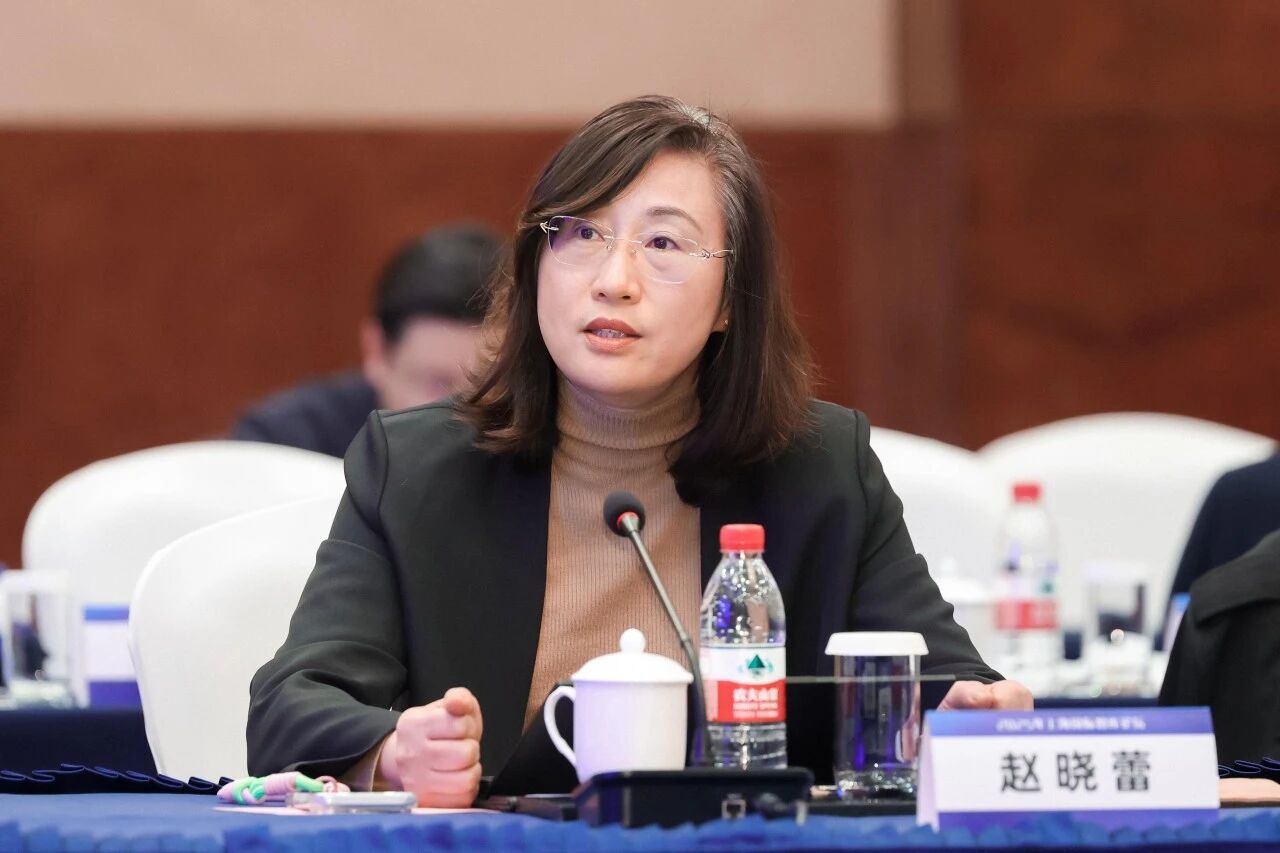
During the dialogue session of the forum, Head ZHAO Xiaolei introduced to the conference the latest Industrial Development Report 2026 released by UNIDO. She elaborated on UNIDO’s perspective regarding the essence of this round of global industrial transformation—a profound shift characterized by the trinity of greening, digitalization, and inclusivity. Furthermore, she offered recommendations for Shanghai’s future development by referencing the “three major relevance gaps” revealed in the report.
First, addressing the “manufacturing value-added gap” fundamentally requires a leap from experience-driven to data-driven approaches—shifting from a physical hub to an intelligent hub. Shanghai can seize this opportunity to build a more transparent, flexible, and adaptive regional industrial community by establishing regional industrial data infrastructure, fostering new business models in “AI + industrial services”, and developing resilience assessment and simulation platforms.
Second, with the full implementation of the EU’s Carbon Border Adjustment Mechanism (CBAM), the “environmental efficiency gap” has become more critical, giving rise to a vast new ecosystem of green producer services. Shanghai can play a key role in areas such as green technology integration, carbon asset management, and green supply chain services, turning the environmental efficiency gap into a window of green opportunity.
Third, to address the “regional collaboration gap”, Shanghai should strengthen the integration of regional value chains in its outward industrial investments.